I was the most qualified person in my coaching cohort, and I still wasn’t accepted as a coach. The reason exposed a trap that catches most capable leaders: correcting when they should be coaching.
Read More
I was the most qualified person in my coaching cohort, and I still wasn’t accepted as a coach. The reason exposed a trap that catches most capable leaders: correcting when they should be coaching.
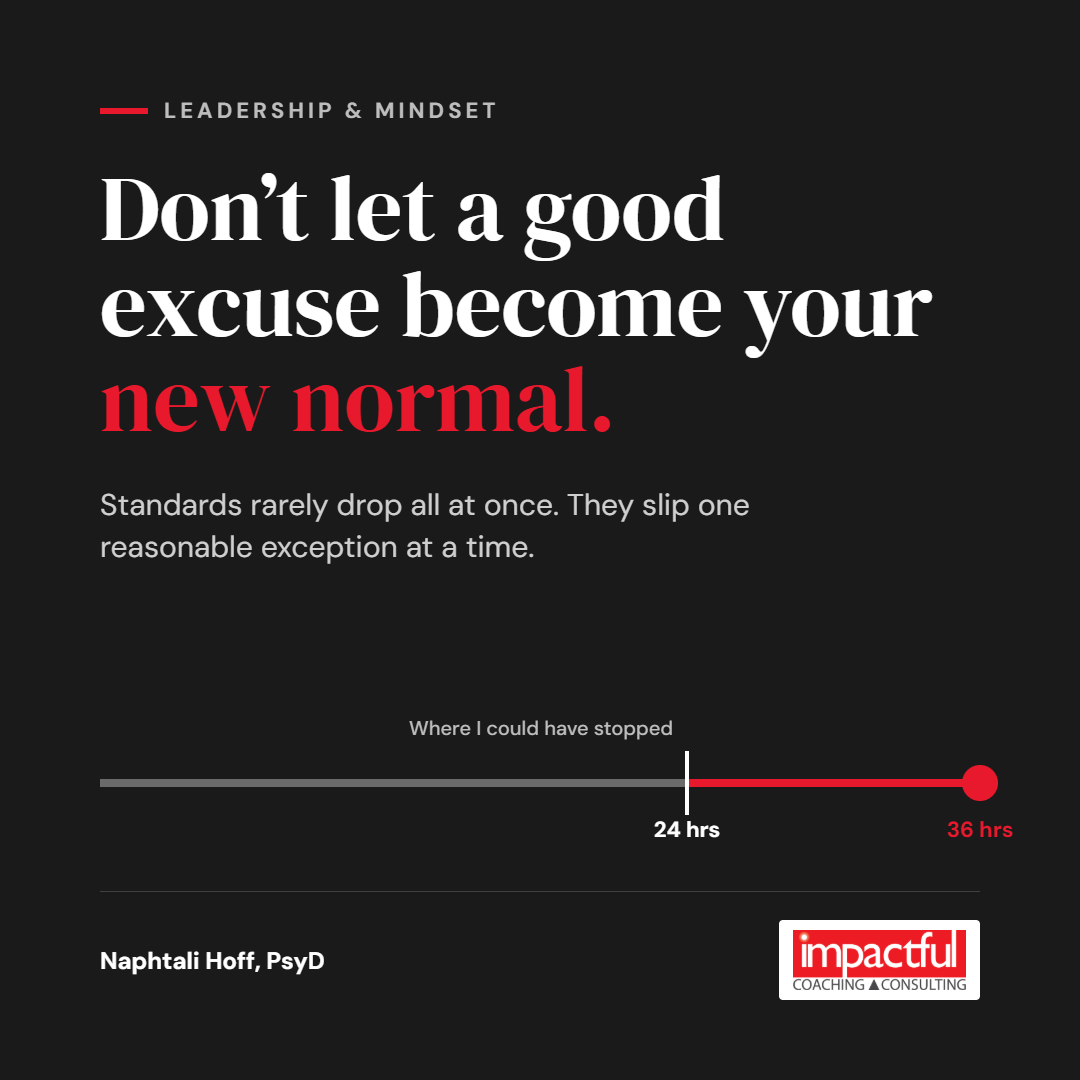
Read MoreTwenty-four hours into a fast, I had every reason to stop, and nobody would have blamed me. I kept going to 36. Here's why, and what it taught me about how leaders' standards slip one reasonable excuse at a time.
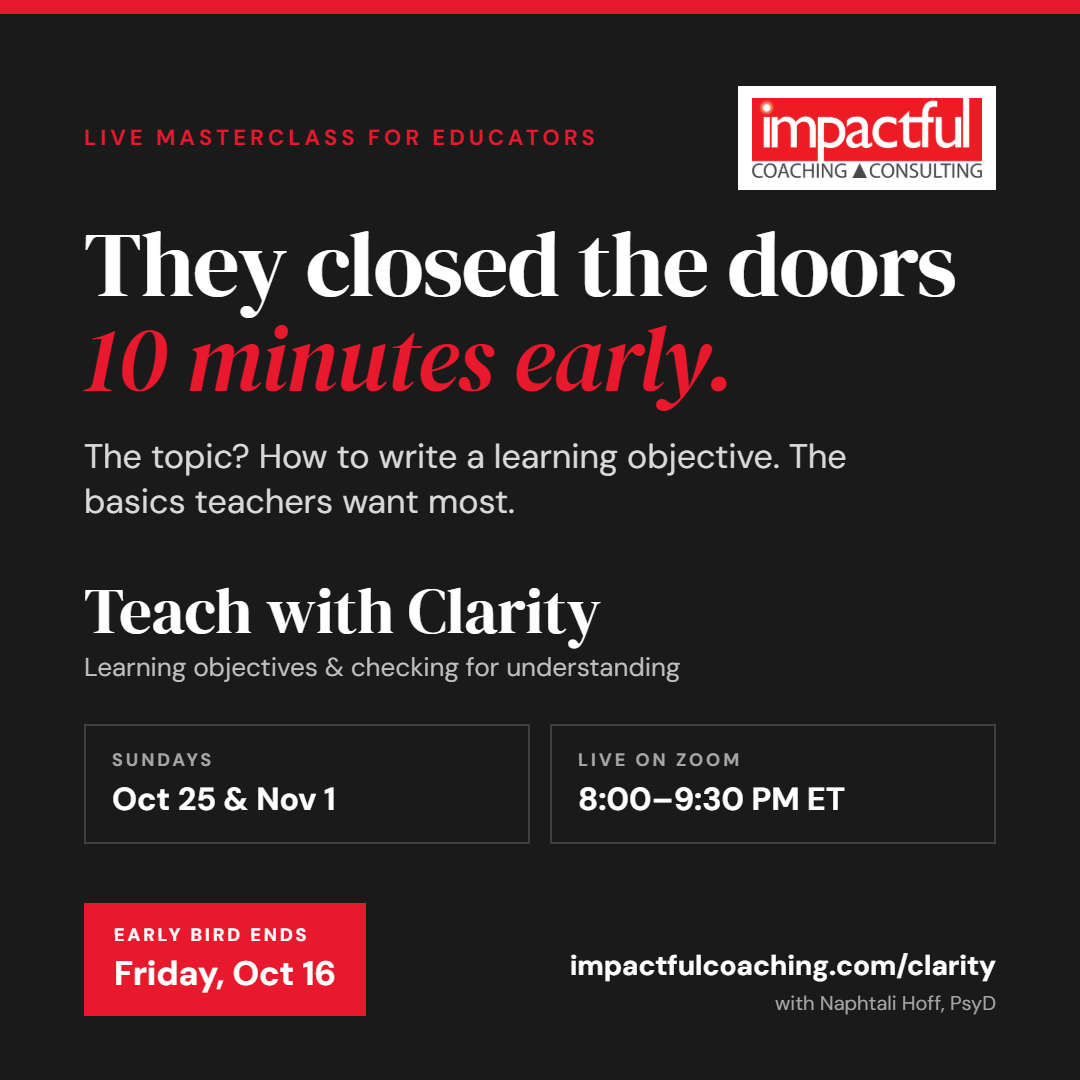
Read MoreYears ago, a conference asked me to teach the most “basic” topic on my list. Both sessions were standing room only. Here’s what that taught me about the skills teachers, and leaders, most want help with.
Read MoreAs a principal, I was first in and last out, and I wore the hours like proof that I mattered. Here's what that scoreboard really cost, and what I measure now.
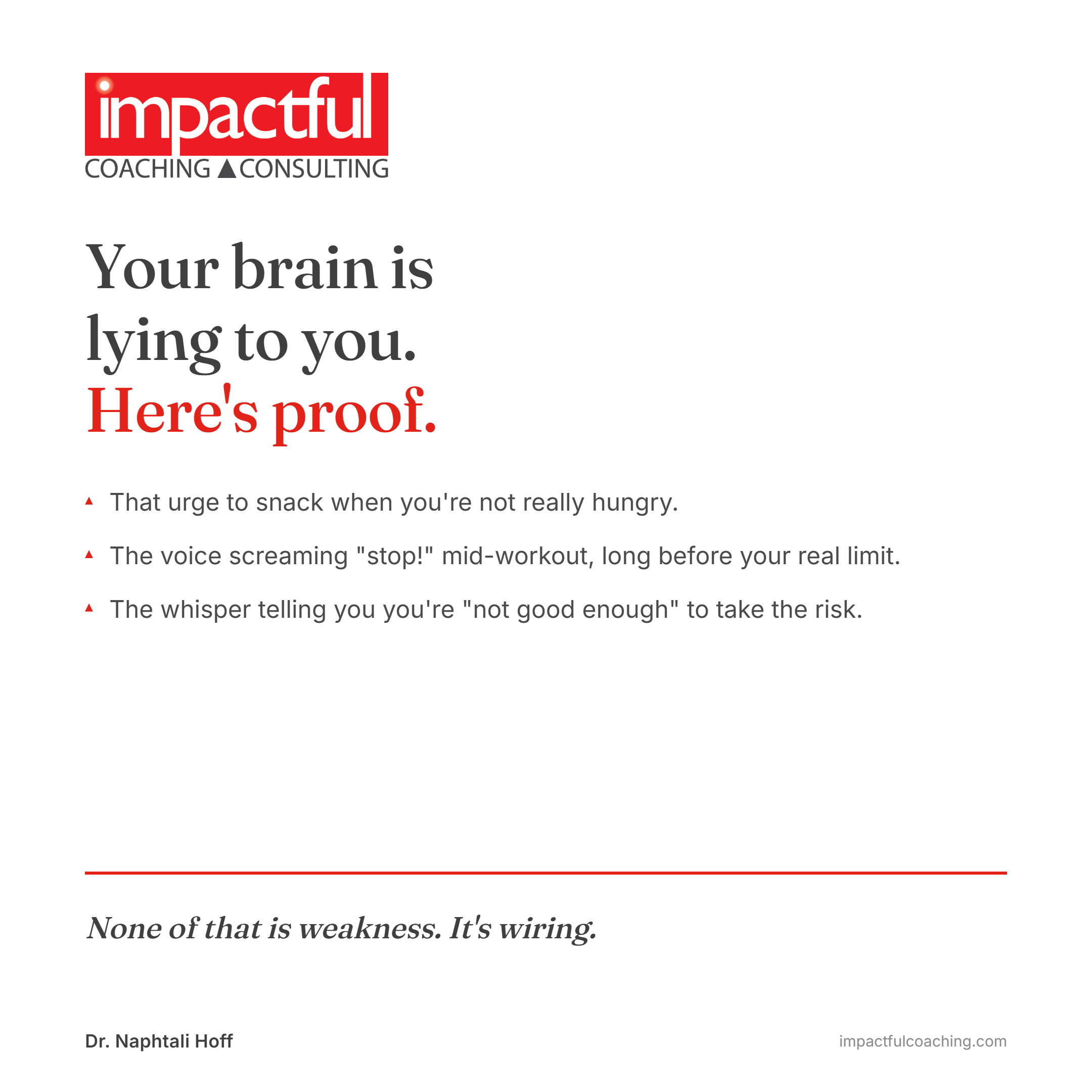
Read MoreEver notice how your mind whispers "just a small snack" two hours after lunch, even though you're not actually hungry? Or how it screams "stop!" during a workout — long before your body has hit its real limit? Or how it talks you out of the bold move, the big ask, the risk — because "you're probably not good enough anyway"?
That's not weakness. That's wiring.
Read MoreToday's fast day marks a tragedy the Jewish people brought on themselves, not their enemies. A trusted governor ignored a credible warning, was murdered, and the fallout ended any near-term hope of restoration — a 2,500-year-old lesson in why trust and verification have to work together.
Read MoreYour biggest obstacle to sales isn't competition — it's comparison. Here's why the businesses that stop chasing the field and start becoming incomparable are the ones that win.
Read MoreThis past week, my scale showed me something it hadn't shown in years: a number under 200.
It doesn't sound like much on paper. But I've lived north of 200 pounds for a long time — as high as 218 at points. I never quite thought of myself as "overweight," but I felt it, especially around the middle. So, seeing that number this morning felt like a genuine milestone.
Here's what I want to tell you about how I got there, because I think it matters far beyond the scale.
Read MoreIn Part I, we followed Moses' advocacy that averted God's decree of destruction against the Israelites, and his decision, upon witnessing the people's failure firsthand, to shatter the tablets at the foot of Mount Sinai. That was only the beginning of his response. What follows — rooting out the problem, confronting his brother, rallying his most trusted allies, and climbing the mountain once more — completes the picture, and gives Elul its name.
Read More